 English
 русский
 Français
 Español
 Deutsch
 عربى
Industry News

Content
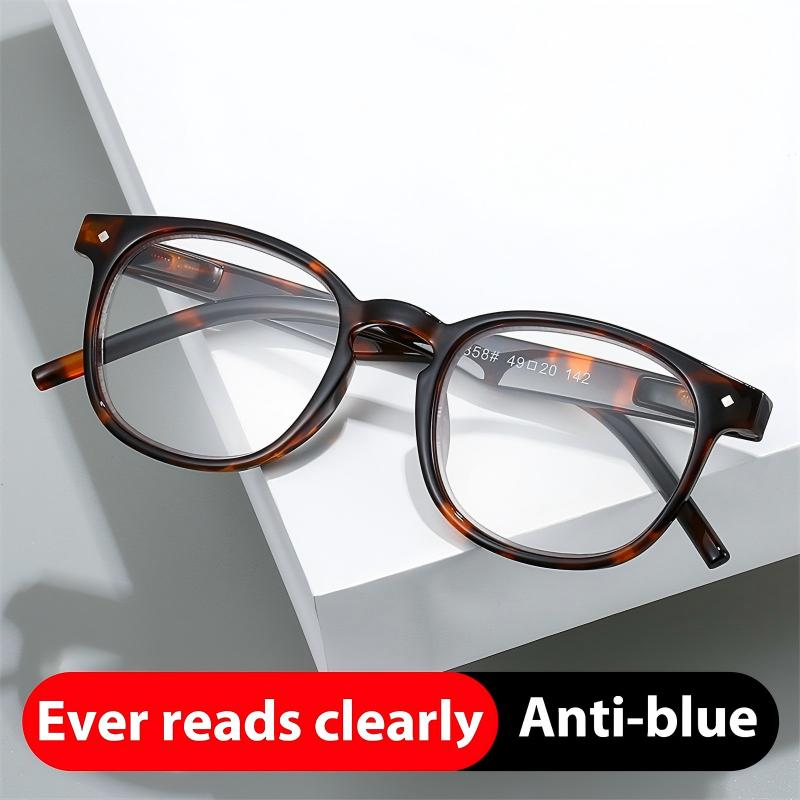
Long hours in front of computers, tablets and phones often leave the eyes feeling tired, dry or strained. Reduced blinking, sustained near focus, glare from the display and less-than-ideal room lighting all contribute to that discomfort. Adjusting screen brightness, improving ambient light and taking regular visual breaks remain foundational steps. Some users also look at lenses that filter a portion of blue light as an additional measure. TR90 Flexible Reading Glasses and Anti Blue Eyewear Ultralight Reading Glasses that combine filtering coatings or materials with appropriate optical power and a lightweight frame are therefore evaluated as one possible element of a more comfortable screen-use setup, not as a complete solution on their own.
When attention stays fixed on a screen, the blink rate tends to drop and the eyes remain focused at a short distance for long periods. The result can include a dry sensation, intermittent blurring and a dull ache around the eyes or temples. These effects accumulate over a working day and are more noticeable when the same posture and viewing distance are maintained without interruption.
A screen that is much brighter or much dimmer than the surrounding light forces the visual system to adapt continuously. Reflections from windows or overhead lamps add further interference. Matching screen luminance to the room and positioning the display to avoid glare reduce one source of strain before any eyewear is considered.
Short pauses that allow the eyes to look at a distant object, conscious blinking and the use of a prescription or reading power suited to the actual viewing distance address major contributors to discomfort. Blue-light filtering does not replace these measures; it is assessed only after lighting, posture and optical correction have been reviewed.
Blue light is present in daylight as well as in the output of digital displays. Filtering lenses are designed to reduce transmission of selected wavelengths within that range, either through absorbing materials or through surface coatings. The exact band that is attenuated and the percentage of reduction vary by product.
The lenses aim to lower the amount of the targeted blue wavelengths that reach the eye. Buyers compare the stated filtering range and any available test data rather than assuming that every pair labelled "blue-light filtering" performs identically. Optical clarity and the correctness of any reading or prescription power remain separate and essential requirements.
User reports differ, and current evidence does not demonstrate that blue-light-filtering glasses reliably prevent or relieve digital eye strain for every wearer. Screen habits, ambient lighting, viewing distance and the accuracy of any optical correction continue to exert strong influence. Filtering eyewear is therefore regarded as a supplementary option whose benefit, if any, is individual.
When products are compared, the wavelengths filtered and the degree of reduction are taken from the supplier's documentation. Claims without supporting detail are given less weight than measurements that can be reviewed.
A lens that filters blue light but is optically incorrect for the user's working distance will still produce strain. Reading powers or prescription strengths are selected according to the actual distance from eye to screen or page. Filtering is an addition to, not a substitute for, proper refractive correction.
Some lenses darken when exposed to certain outdoor light conditions and lighten again indoors. The extent of tint, the speed of change and the degree of activation behind vehicle windscreens differ by technology. These properties are checked against the environments in which the glasses will actually be worn.
TR90 is a lightweight thermoplastic used for spectacle frames because of its low mass and practical toughness under ordinary handling. Frame material influences how the glasses feel over a full day and how they respond to minor impacts or flexing.
Overall weight, the shape and placement of nose pads or saddle bridges, temple length and the width of the front all determine whether the frame remains comfortable and stable. A frame that slips, pinches or sits too heavily on the nose or ears becomes a distraction regardless of the lens functions it carries.
A square eye shape provides a structured outline preferred by some wearers. Style is secondary to correct dimensions: the frame must match the wearer's face width, temple length and pupil distance so that the lenses sit in the proper position for the intended optical power.
Wearers who move repeatedly between offices, corridors and outdoor areas may find a single pair that adjusts its tint convenient. The usefulness depends on how strongly and how quickly the lenses respond under the specific lighting conditions encountered.
Screen work, prolonged reading and bright outdoor exposure place different demands on the visual system. Photochromic lenses are not automatically equivalent to purpose-made sunglasses in every outdoor setting, nor do they remove the need for correct near correction during close work. Each use case is considered on its own.
Before purchase, the stated tint range, the conditions that trigger darkening, the approximate transition behaviour and any notes about performance behind glass are reviewed so that expectations match the product's actual characteristics.
The main activities—computer work, document reading, mobile-device use, or a mixture of indoor and outdoor movement—are listed so that lens power, filtering and photochromic needs can be prioritised accordingly.
Filtering specifications, optical power, frame weight, dimensions and comfort are examined together. A lightweight frame that fits poorly or a correctly filtering lens with the wrong power will still leave the wearer uncomfortable.
Blue-light filtering data, photochromic description, lens material, frame measurements and available power options are confirmed against the intended use. Incomplete or inconsistent information is clarified before any commitment is made.
| Factor | Contribution to Comfort or Discomfort | Practical Check |
|---|---|---|
| Screen time and near focus | Sustained demand on focusing and reduced blinking | Schedule short visual breaks; encourage regular blinking |
| Display and room lighting | Glare and luminance mismatch increase strain | Balance screen brightness with ambient light |
| Optical power accuracy | Incorrect power causes additional focusing effort | Match reading or prescription power to viewing distance |
| Blue-light filtering | Reduces selected wavelengths; effect on strain varies | Compare stated filtering range and supporting data |
| Photochromic response | Convenience when light levels change | Review tint range and activation conditions |
| Frame weight and fit | Heavy or poorly fitting frames add physical distraction | Assess mass, nose support, temple length and stability |
| Overall workstation setup | Posture and viewing distance influence strain | Position screen and seating for neutral posture |
Visual comfort during screen work depends on lighting, viewing habits, correct optical power and a frame that remains comfortable over time. Blue-light filtering may be of interest to buyers seeking that specific lens characteristic, yet it does not by itself resolve digital eye strain. Photochromic behaviour and lightweight frame materials add further options for wearers whose day includes changing light or long periods of wear. Thinkey Optical Co., Ltd. supplies reading and screen-oriented eyewear options that incorporate TR90 frames and lens functions including blue-light filtering and photochromic response. Review of available powers, filtering specifications, photochromic descriptions and frame dimensions against individual visual tasks and fit requirements allows selection of eyewear suited to everyday screen and reading use.
If you have any questions, please fill out the contact form at the bottom of the page and contact us.
Best selling Products
Best sellers, Globally Chosen
Contact
Let’s Work Together
© Thinkey Optical Co., Ltd.
Quick Links
Stay In Touch
Address:
611# Paimen Road DuQiao Town Linhai City Zhejiang China.
Phone:
0086-13788990737
Email:
Website

China Lenses and Eyeglass Factory
 Previous