Industry News
Welcome to Thinkey Optical Co., Ltd.
Content
A supplier tells you their blue light protection lenses block 45% of blue light. Another offers 30%. The first quote looks more attractive, right? Not so fast.
That percentage doesn't tell you everything about the lens. One product might look almost clear, while another has a yellow tint. The lenses may also differ in optical clarity, surface reflections, and the range of wavelengths they filter. Those differences matter when you're buying for an eyewear brand or trying to find a product your customers will actually like wearing.
For optical retailers, distributors, and private-label businesses, choosing lenses isn't just about picking the biggest number on a specification sheet. You need to know what that number means, how the lens looks in real life, and whether the manufacturer can deliver the same quality across a bulk order.
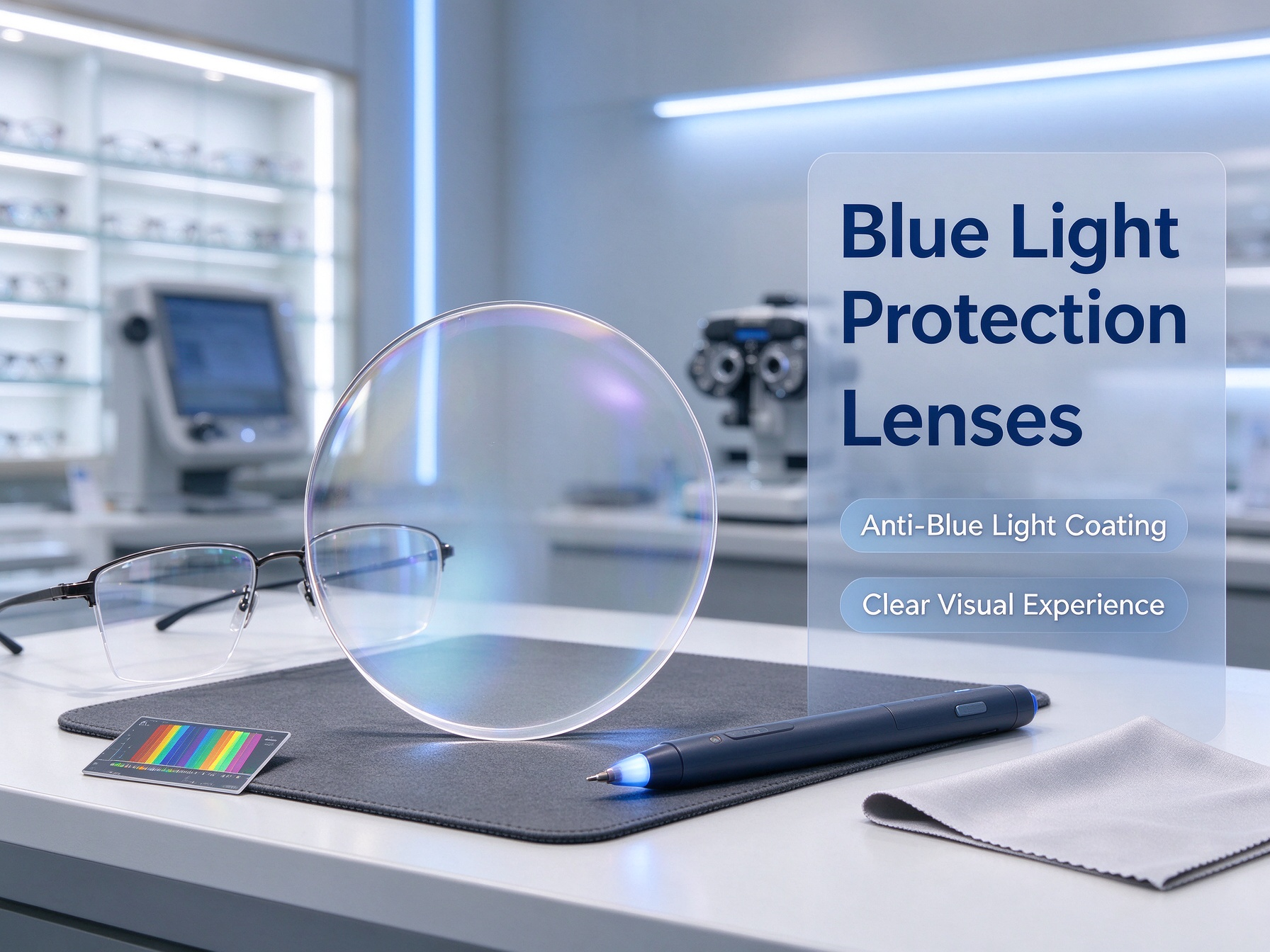
So, when sourcing Blue Light Protection Lenses, what should you check besides the blocking percentage? Let's look at the details that can make a real difference when comparing suppliers.

Before comparing two percentages, ask one simple question: Which wavelengths were tested?
Visible light is commonly described as covering approximately 380–780 nanometers, although the exact boundaries depend on the convention being used. Blue light occupies part of this range, and manufacturers don't always use the same wavelength band when calculating their blocking percentages.
For example, one supplier might calculate average blocking across 400–450 nm, while another uses 380–500 nm. Both might advertise an impressive-looking figure, but they're measuring different ranges of light. Comparing those numbers directly won't give you a fair picture of which lens filters more light.
When requesting a quote, ask the supplier for a few details:
Which wavelength range was used for the calculation?
Is the percentage an average across that range or a reading at one particular wavelength?
Was the finished lens tested, or was the result based on the coating material?
Which testing method was used?
Can the supplier share a report for the exact lens you're considering?
These questions might sound technical, but they can save you from choosing a product based on a number that doesn't tell the full story.
A lens doesn't necessarily block every part of the blue light spectrum equally. It may reduce transmission more strongly at certain wavelengths while allowing more light through at others.
A single percentage hides those differences. A spectral transmittance curve gives you a better view of what's happening because it shows how much light passes through the lens at different wavelengths.
When comparing suppliers, ask for these curves and check whether the test ranges match. If they don't, you need to understand the difference before deciding which product suits your requirements.
Here's something customers notice straight away: the color of the lens.
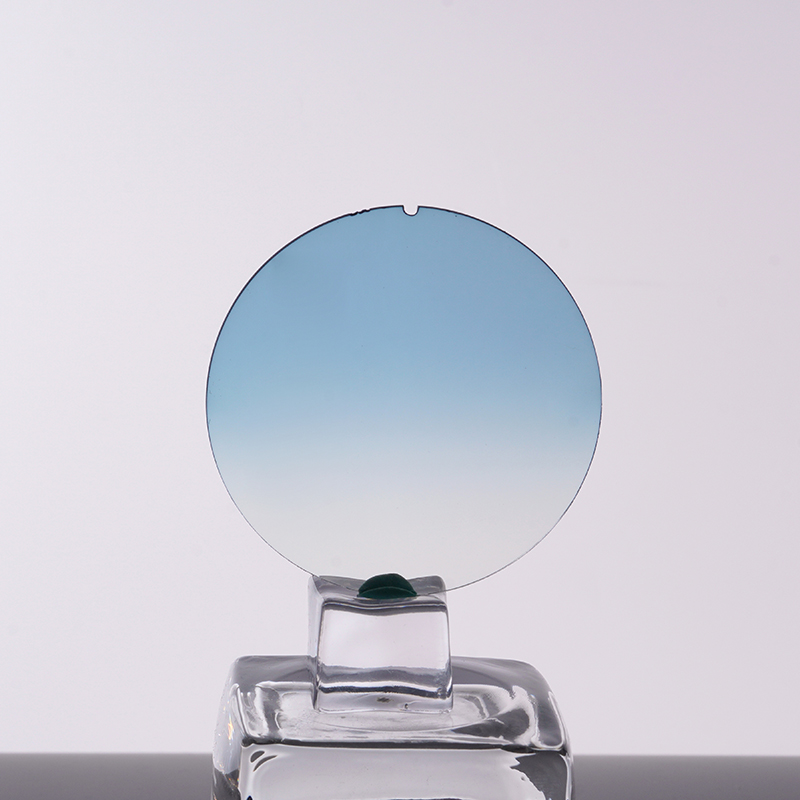
Some blue light protection lenses look almost clear, while others have a yellow or amber tint. Neither appearance is automatically right or wrong. It depends on the product you're selling and what your customers expect.
Visible light transmission, usually called VLT, measures how much visible light passes through a lens under a specified test method. It's a different measurement from the blue light blocking percentage, so don't treat the two as interchangeable.
|
Lens characteristic |
What to check |
Why it matters |
|---|---|---|
|
Blue light attenuation |
Filtering across the specified wavelength range |
Helps verify the advertised filtering properties |
|
Visible light transmission |
VLT under the stated measurement method |
Affects brightness and lens appearance |
|
Color appearance |
Clear, slightly tinted, yellow, or amber |
Influences how the glasses look when worn |
|
Color perception |
Whether colors appear different through the lens |
Important for photography, design, and color-sensitive work |
|
Optical clarity |
Haze, distortion, and visible defects |
Affects the viewing experience |
Say you're sourcing lenses for everyday office glasses. A customer may want something that looks like an ordinary clear lens. A strong yellow tint could put them off, even if the product has the filtering characteristics they expected.
Don't rely on product photos to judge this. Lighting and camera settings can make a lens look much clearer or darker than it really is. Ask for physical samples and compare them under the same lighting.
And remember, a higher blocking percentage doesn't automatically tell you what the VLT will be. Check both figures before making a decision.
A lens can meet its advertised filtering specification and still disappoint the customer. Haze, uneven tinting, scratches, or visual distortion can make the finished product feel poorly made.
For prescription lenses, optical power and the requirements for the destination market also need attention. Non-prescription lenses still need consistent optical quality, particularly when you're selling them under your own brand.
When checking samples, look for:
Scratches, bubbles, inclusions, or other visible surface defects.
Patches of uneven tint or coating.
Distortion when looking at straight lines through different parts of the lens.
Noticeable differences between samples of the same model.
Surface defects that remain visible under normal inspection lighting.
One quick check is to hold the lens in front of a printed grid or another object with straight lines. Move the lens around and see whether the lines appear distorted. This won't replace proper optical testing, but it can help you spot an obvious problem before placing an order.
For prescription products, ask the supplier for documented optical measurements against the applicable specifications. A visual check alone isn't enough.
It's also worth finding out how the manufacturer produces the filtering effect. Some lenses have filtering properties built into the lens material; others use a surface coating or combine the two methods.
You don't necessarily need to favor one construction over the other. You do need to know what you're buying and whether the finished lens meets your requirements.
Many blue light protection lenses come with additional coatings, such as anti-reflective, scratch-resistant, or easy-clean treatments. But don't assume every supplier includes the same features just because the products have similar names.
Ask what's actually included in the quote.
You've probably seen glasses that show a blue or purple shine when light hits the lens. It can be noticeable under office lighting, during a video call, or in photographs.
That reflection doesn't tell you how much blue light the lens blocks. The reflected color depends on the coating, while the blocking percentage describes light attenuation across a specified wavelength range. They're different measurements.
For an eyewear brand, the appearance still matters. A noticeable reflection may suit one product but look out of place on another.
Try samples under a few different lighting conditions. A lens that looks clear near a window might show a much stronger reflection indoors.
A coating can get damaged through rough handling, abrasion, or the use of unsuitable cleaning products. If the lens is intended for everyday use, that's worth checking before committing to a large order.
Ask the supplier:
Which coatings are included, and are they applied to one or both surfaces?
What abrasion or adhesion tests are carried out?
Are test results available for the finished lens?
Which cleaning methods does the manufacturer recommend?
How should the lenses be packed and stored to avoid surface damage?
A scratch-resistant coating isn't scratch-proof. Its performance depends on the lens material, coating system, and test conditions. Make sure the product description matches what the supplier can actually demonstrate.
A brochure might show the blocking percentage, lens tint, and available coatings. That's useful for getting a rough idea of the product, but it doesn't tell you how the figures were obtained.
Ask for technical documents that identify the lens model, test method, and results. If the supplier sends you a report for another lens or coating, don't assume it applies to the product you're ordering.
|
Document or test |
What to look for |
|---|---|
|
Spectral transmittance report |
Light transmission across the tested wavelength range |
|
Visible light transmission test |
VLT under the stated measurement method |
|
Optical quality report |
Relevant optical power and quality measurements |
|
Coating durability results |
Performance under specified abrasion or adhesion tests |
|
Product specification sheet |
Lens material, coating structure, tint, and available options |
|
Quality control records |
Inspection methods and batch consistency |
The required documents depend on the product and the market where it will be sold. Prescription and non-prescription lenses may have different requirements.
It's also worth asking who performed the testing. An independent laboratory report and an internal factory test can both provide useful information, but they don't offer exactly the same level of independence.
Check that the paperwork covers the actual lens you're buying, too. One report shouldn't automatically be treated as proof that every lens in the manufacturer's catalog meets the same specification.
Getting this sorted out before production is much easier than discovering after delivery that the test documents don't match your order.
Different eyewear businesses need different products. A lens designed for everyday prescription glasses may not be suitable for every fashion or special-purpose application.
Before choosing a specification, consider what your customers expect from the finished glasses.
Everyday office eyewear: Customers may prefer a clear appearance, good optical clarity, and consistent quality.
Fashion eyewear: Tint, reflections, and how the lens looks in different frames can influence the finished design.
Prescription glasses: Optical accuracy and compliance with applicable requirements need particular attention.
Special-purpose eyewear: The intended use may call for additional testing or specific product features.
There's another point worth keeping in mind: blue light filtering shouldn't automatically be presented as a health benefit.
Research has not established that blue light filtering spectacle lenses reliably reduce digital eye strain for the general population. Evidence that they improve sleep outcomes is also limited and depends on factors such as when light exposure occurs and the design of the study.
For product descriptions, stick to what the lens can demonstrate. If a supplier claims a specific filtering performance, ask for the test results. Don't turn that percentage into a promise about preventing eye damage or eliminating eye strain without adequate evidence.
A sample might look great, but what happens when you order 2,000 or 10,000 lenses?
For eyewear brands and distributors, consistency matters. Customers expect replacement products to look and perform like the ones they bought before. If one batch looks clear and the next has a noticeably different tint, you've got a problem.
Before placing a bulk order, ask how the manufacturer handles:
Incoming materials: How are lens blanks and coating materials checked?
Production controls: How are coating conditions and other important processes kept consistent?
Final inspection: Which optical and cosmetic defects are checked?
Batch records: Can the supplier trace a shipment back to its production batch?
Defective products: What happens when lenses fail the agreed inspection criteria?
For larger orders, agree on acceptable variation in tint, visible defects, optical performance, and packaging before production starts.
Keep an approved sample and the relevant technical documents for later comparison. If the factory wants to change the lens material or coating, ask to review the updated product instead of assuming it will match the previous version.
This is particularly useful for repeat orders and private-label products, where even small differences between batches can become noticeable to customers.
When contacting blue light protection lens suppliers, don't stop at asking for the blocking percentage and unit price. A few specific questions can tell you much more about whether the product suits your requirements.
Ask:
Which wavelength range is used to calculate the blocking percentage?
Can you provide the full spectral transmittance curve?
What is the VLT of the finished lens?
Is the lens clear or tinted, and how noticeable are its reflections?
Which lens material and coating system are used?
What optical quality and coating durability tests are available?
Can you maintain the same specifications across repeat orders?
What are the minimum order quantities for customized options?
Which compliance documents are available for the destination market?
Ask for supporting documents where possible. If two suppliers quote different blocking percentages, compare the wavelength ranges and testing methods before deciding which offer suits you.
Samples are useful here, too. Technical data tells you what's been measured; a physical lens lets you check its appearance and finish before you commit to a large order.
A blue light blocking percentage is useful, but it doesn't tell you everything. The wavelength range, VLT, optical clarity, coating durability, and consistency between production batches all affect whether a lens is suitable for your market.
For optical retailers, distributors, and eyewear brands, a sensible approach is to compare the test reports with physical samples. Make sure the documents cover the actual product, then check that the finished lenses look and perform as expected.
When sourcing Blue Light Protection Lenses, you don't need to chase the biggest percentage on a sales sheet. You need a lens that matches your product requirements, comes with reliable specifications, and stays consistent when it's time to reorder.
If you have any questions, please fill out the contact form at the bottom of the page and contact us.
Best selling Products
Best sellers, Globally Chosen
Contact
Let’s Work Together
Quick Links
Stay In Touch
Address:
611# Paimen Road DuQiao Town Linhai City Zhejiang China.
Phone:
0086-13788990737
Email:
Website