 English
 русский
 Français
 Español
 Deutsch
 عربى
عربى
Industry News
Home / News / Industry News / Do Progressive Lenses with Blue Light Protection Really Help Reduce Eye Strain

Content
In many workspaces, screens stay on from morning until late evening. People move from laptops to phones without much pause. Reading distances change often. Light sources shift throughout the day. In this setting, visual discomfort has become a common complaint. It does not always appear as pain. Sometimes it shows up as dryness, blurred focus, or a quiet sense of fatigue behind the eyes.
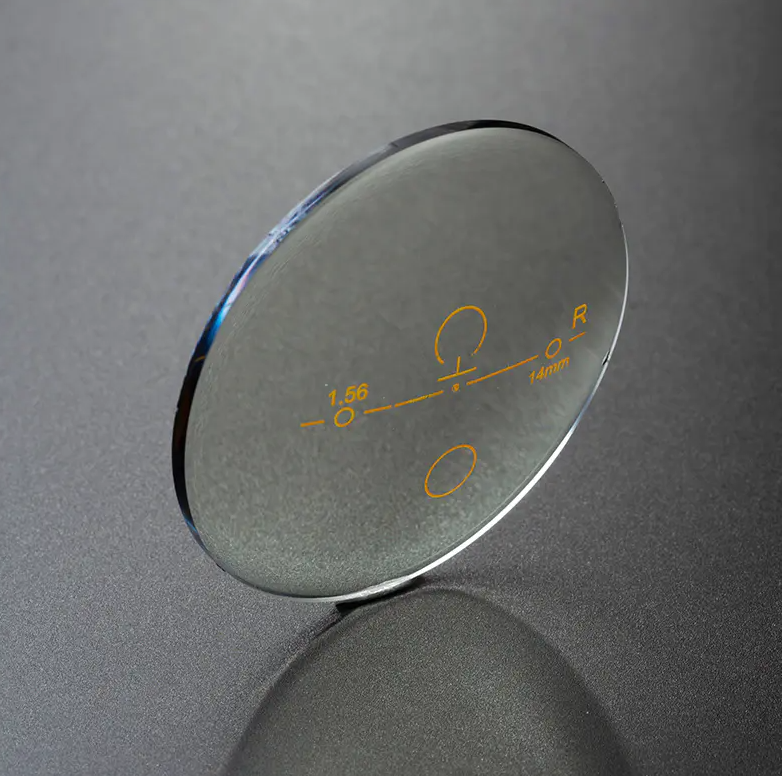
Progressive lenses with blue light protection are often discussed as a possible response to these changes. They combine two ideas into one lens. One relates to distance transitions. The other relates to light filtering. The question that keeps coming up is simple: do they actually reduce eye strain in daily use?
The answer is not as direct as many expect. It depends on how eye strain forms in the place, and how different visual habits interact with lens design.
Eye strain is rarely dramatic. It tends to build slowly. A person may begin the day feeling fine, then notice subtle discomfort after several hours of close work. The signs vary from one person to another, but common patterns appear.
Some people describe a tight feeling around the eyes. Others notice that text becomes harder to hold in focus. There may be a need to blink more often. In some cases, attention drifts more quickly, even when the task is not difficult.
This kind of strain is often linked to repetition. Looking at the same distance for long periods can reduce natural variation in eye movement. The eyes stay fixed, while the surrounding muscles remain in a similar position. Over time, that lack of change can find to fatigue.
Lighting also plays a role. Bright screens in dim rooms create contrast. Glare from overhead sources adds another layer. The eyes adjust again and again, even when the user is not aware of it.
Eye strain, then, is not caused by a single factor. It grows from a mix of posture, lighting, focus distance, and visual habits.
Progressive lenses are designed to support multiple viewing distances within one surface. Instead of switching between different pairs of glasses, the wearer can shift focus by adjusting gaze direction.
The upper area usually supports distance vision. The middle area supports intermediate tasks. The lower area is used for near work, such as reading.
This structure changes how the eyes move during daily tasks. Instead of holding a fixed position, the wearer naturally tilts the head or shifts gaze to find the right zone. Over time, this can introduce more variation into visual behavior.
That variation matters. When the eyes are allowed to move across different focal zones, the muscles around them do not remain static for long periods. This can ease some forms of fatigue that come from staying locked into one position.
However, adaptation takes time. New users often need a period of adjustment. During this phase, movements may feel less natural. The benefit appears gradually rather than instantly.
Blue light is part of the visible spectrum. It is present in daylight and also emitted by many digital screens. Its role in eye strain is often discussed, though the experience varies among individuals.
Some people report discomfort when exposed to bright, cool-toned light for long periods. This may include a sense of glare or visual sharpness that feels tiring. Others notice little difference.
The discussion around blue light often focuses on exposure patterns. Short bursts of screen use rarely cause noticeable strain. Long, continuous sessions are more likely to do so. The intensity of the light source and the surrounding environment also shape the experience.
Blue light does not act alone. It interacts with brightness, contrast, and viewing distance. When these elements combine in certain ways, the eyes may need to work harder to maintain focus.
Blue light protection is usually applied as a filtering layer within the lens. This layer adjusts how certain wavelengths pass through to the eye.
The goal is not to block all blue light. Instead, it aims to soften its intensity under specific conditions. This can change how light is perceived, especially during extended screen use.
When combined with progressive design, the filtering effect remains consistent across different viewing zones. Whether the wearer is looking at a screen, reading a document, or glancing across a room, the lens maintains a similar light response.
This consistency matters. It avoids sudden shifts in color tone or brightness when moving between distances. The experience feels more continuous, which can support visual comfort over time.
The effect is often indirect. Progressive lenses address how the eyes move and focus. Blue light filtering adjusts how light is perceived. Together, they shape the visual environment rather than targeting strain as a single issue.
For some users, the combination leads to noticeable relief. This often happens when eye strain is linked to both focus fatigue and light sensitivity. The lenses introduce variation in viewing distance while softening certain lighting conditions.
For others, the change is less obvious. If strain is mainly caused by posture or long hours without breaks, lenses alone may not make a strong difference.
The outcome depends on how well the lens features match the user's habits. A person who frequently shifts between screen and paper may benefit more than someone who stays at one fixed distance.
Several elements shape how these lenses perform in daily life. No single factor defines the result.
Usage patterns
People who move between tasks tend to notice the benefits more clearly. The progressive design supports these transitions in a natural way.
Screen habits
Long, uninterrupted screen sessions can still to fatigue, even with filtering. Regular pauses remain important.
Lighting environment
Balanced lighting reduces the need for constant adjustment. Harsh contrasts can override the comfort provided by the lens.
Adaptation period
The brain needs time to adjust to progressive zones. Early impressions may not reflect long-term experience.
Individual sensitivity
Some users are more responsive to changes in light or focus. Others may not perceive strong differences.
These factors interact. A small change in one area can influence the overall effect.
Feedback often shifts after a period of use. At the beginning, attention is focused on the lens itself. Users notice how it feels to move between zones. They may adjust posture more consciously.
After some time, awareness fades. The lens becomes part of the routine. At this stage, users tend to describe broader impressions rather than specific features.
Common observations include:
Not all users report the same experience. Some notice only minor changes. Others feel a gradual improvement that becomes clearer over weeks rather than days.
These lenses are not a complete solution. They address certain aspects of visual behavior, but not all.
If eye strain is linked to long working hours without breaks, the underlying cause remains. The eyes still need time to rest. Blinking patterns, posture, and screen distance continue to matter.
There can also be challenges during the adjustment phase. Some users find it difficult to locate the correct viewing zone at first. This can create temporary discomfort.
Environmental factors also limit the effect. Poor lighting or screen glare may reduce the perceived benefit of blue light filtering.
Understanding these limits helps set realistic expectations. The lenses can support comfort, but they do not replace healthy visual habits.
A simple comparison helps clarify their role:
| Aspect | Progressive Lenses with Blue Light Protection | Single-Focus Lenses with Blue Light Filtering |
|---|---|---|
| Viewing distance | Multiple zones for different tasks | Fixed distance |
| Eye movement | Encourages variation | More static focus |
| Adaptation | Requires adjustment period | Minimal adjustment |
| Flexibility | Supports changing tasks | Best for one main task |
| Light filtering | Integrated across zones | Applied to single focus area |
The key difference lies in how the lenses guide visual behavior. Progressive designs promote movement and variation. Single-focus lenses maintain stability at one distance.
Suitability depends on daily routines. People who rely on multiple viewing distances tend to find more value in progressive designs. This includes those who read, use screens, and interact with their surroundings throughout the day.
Users with simpler visual needs may not require the added complexity. In such cases, a single-focus option may feel more straightforward.
Age can also influence suitability, as focusing ability changes over time. However, lifestyle often plays a stronger role than age alone.
Comfort is subjective. What works well for one person may feel unnecessary to another. Trying the lenses in real conditions often provides clearer insight than theoretical comparisons.
Even with supportive lenses, daily habits remain central to visual comfort.
These actions reduce the load on the eyes in ways that lenses alone cannot achieve.
Progressive lenses with blue light protection can complement these habits. They shape how the eyes interact with the environment. But the overall experience still depends on how that environment is managed.
In real use, the question is less about whether these lenses "solve" eye strain and more about how they fit into a broader pattern of visual behavior. They introduce subtle changes rather than dramatic ones. Over time, those small changes can influence how the eyes feel at the end of the day.
If you have any questions, please fill out the contact form at the bottom of the page and contact us.
Best selling Products
Best sellers, Globally Chosen
Contact
Let’s Work Together
© Thinkey Optical Co., Ltd.
Quick Links
Stay In Touch
Address:
611# Paimen Road DuQiao Town Linhai City Zhejiang China.
Phone:
0086-13788990737
Email:
Website

China Lenses and Eyeglass Factory
 Previous